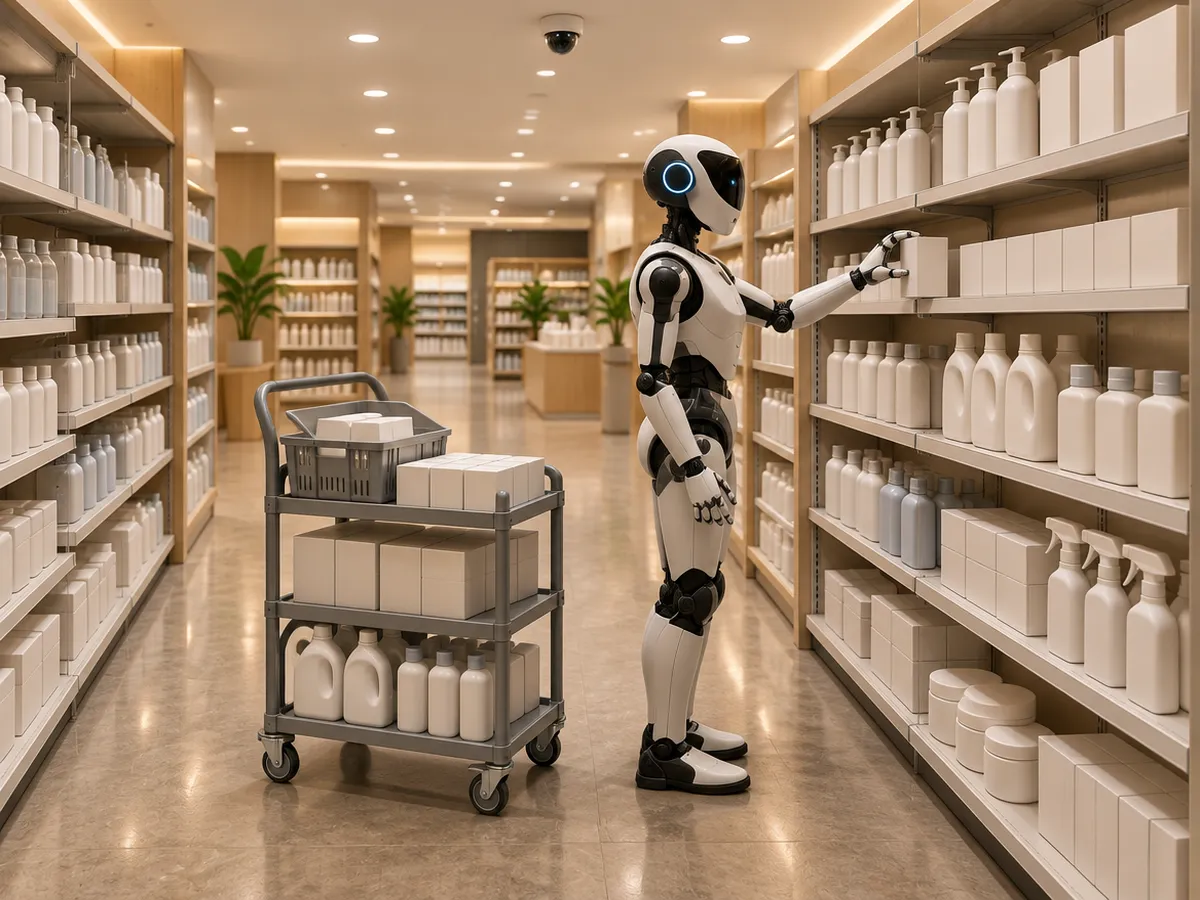
Area 01
Store floor
- Restocking and facing
- Endcap and planogram resets
- Shelf-gap and tag checks
- Floor care and basket returns


Metari is developing replica store, backroom, delivery and distribution center environments. Your best associates show humanoids how the work is done, and every vendor is tested on the same tasks. See what is worth automating before you pay for a pilot, then put what passes to work.
Campus 01 is planned, not operating. Command Center is a prototype. All examples and results are illustrative.
Vendor demos run on the vendor’s own tasks. In-store pilots pull associates off the floor, change the customer experience and take months to read. Every vendor is measured differently, so results are hard to compare.
No remodels, no associates pulled off shifts for weeks, no customer disruption. The work happens in Metari’s environments.
Each humanoid runs your tasks against your acceptance criteria, in the same room, so results can be compared side by side.
A scorecard per task: what passed, what failed, where a person stepped in. Spend pilot money only where the evidence says it will work.
From the shelf to the van to the distribution center. Each replica is configured around the tasks you specify, then held steady so attempts can be compared. Platform neutral: Metari does not build robots.
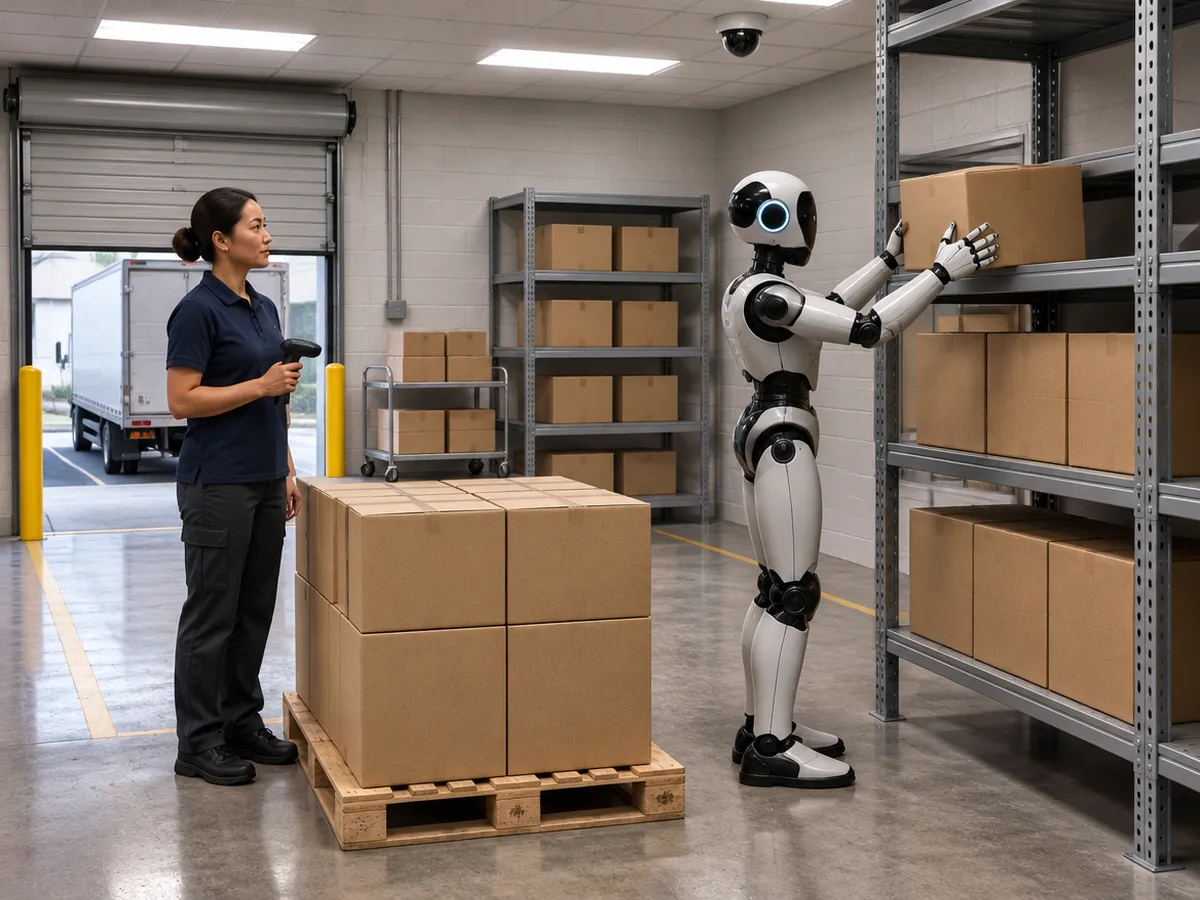
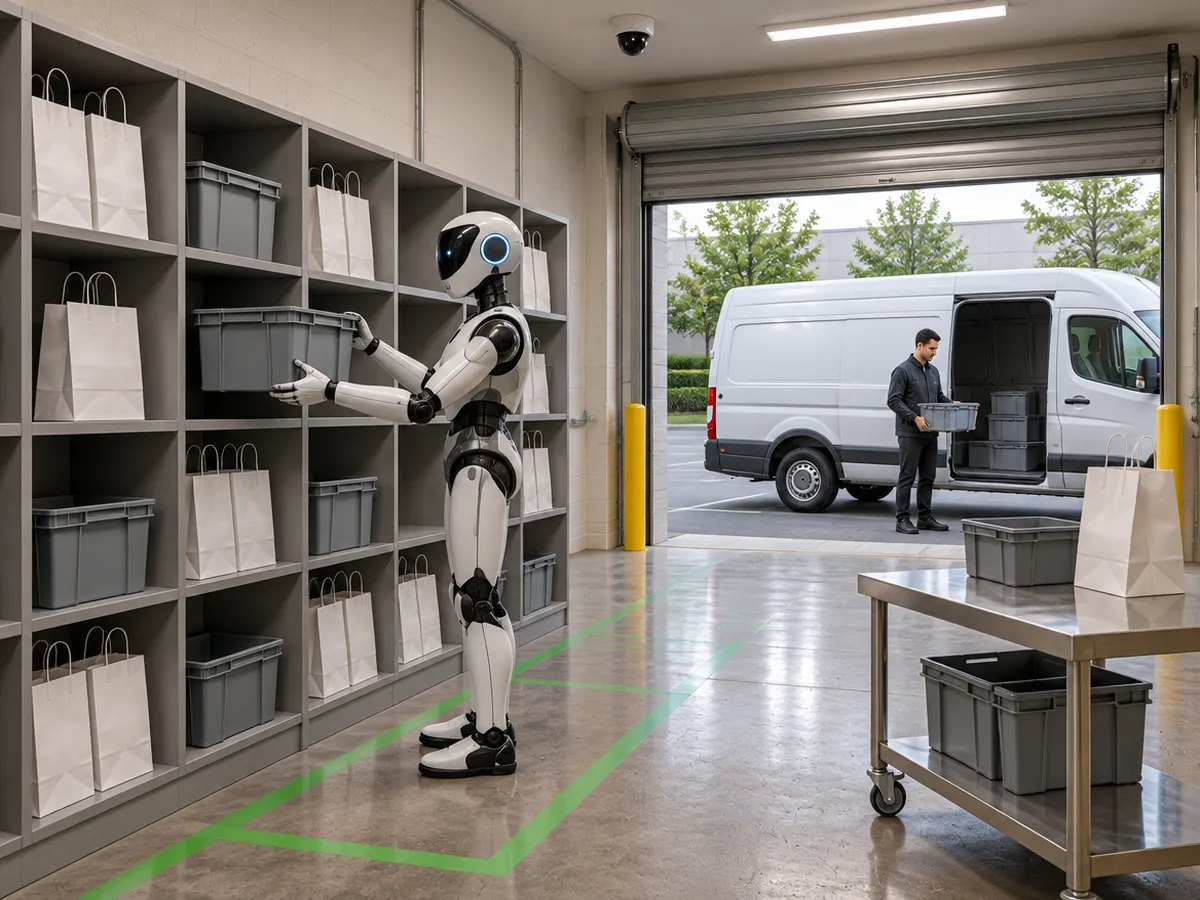
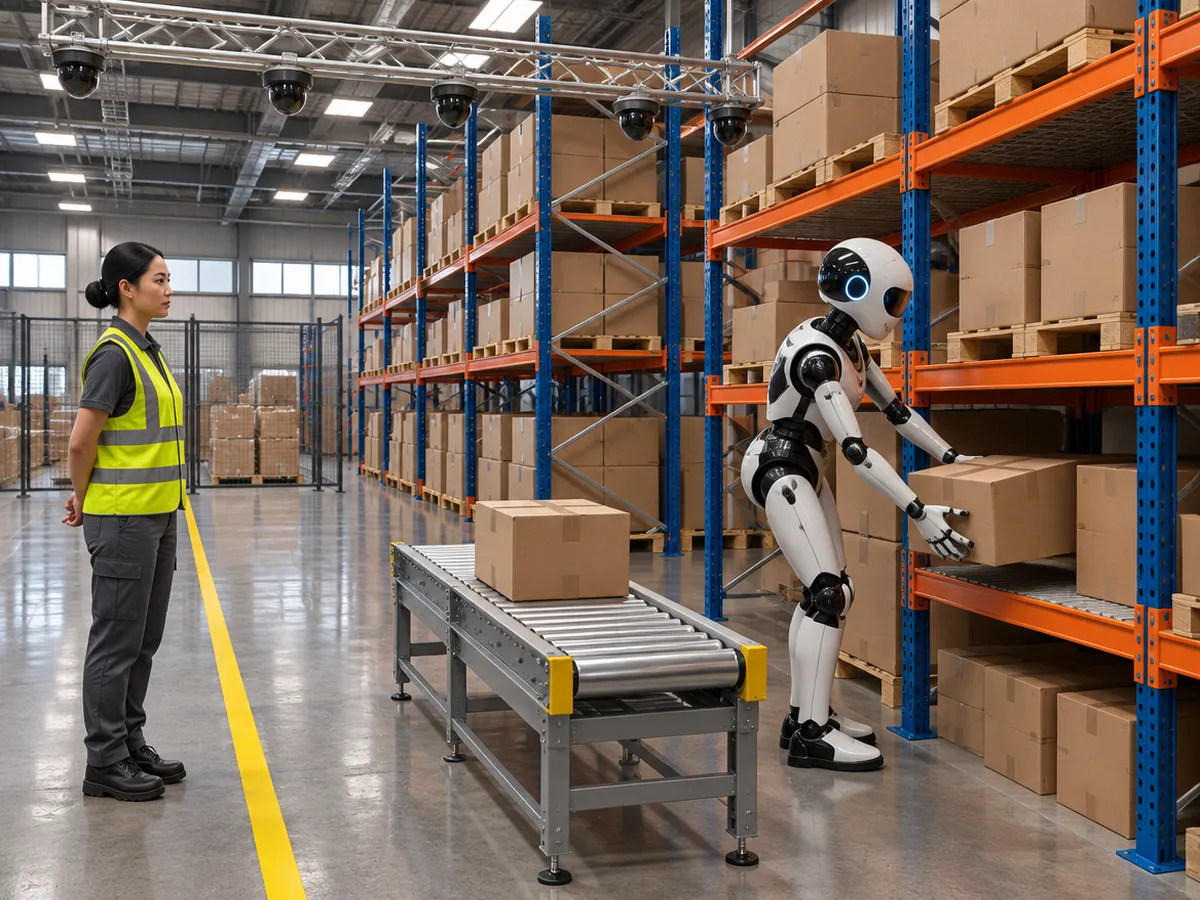
Pharmacy counters and clinical work are out of scope. No patient information is part of Metari Retail. Care settings are covered by Metari Health.
Concept images. No Metari environment is operating yet. Humanoids shown are concept designs and do not represent any manufacturer.
The people who already do the work well are the experts. Metari turns how they do it into data humanoid labs can train on, then measures every humanoid against it.
Your store task and issue records show which shelf, receiving and cleaning jobs repeat most. Those become the task order, with variations and what counts as done.
Experienced associates, drivers and DC workers do the work in the Metari replica, on camera. Ceiling, wall and wearable views share one clock.
Humanoid labs train their own models on those expert demonstrations and on corrections from each attempt.
Every vendor runs the same tasks, including variations it has not seen. You get a scorecard per task and per vendor.
Passing tasks are routed to approved humanoids in selected stores, routes or a DC. Status and evidence return to one record.
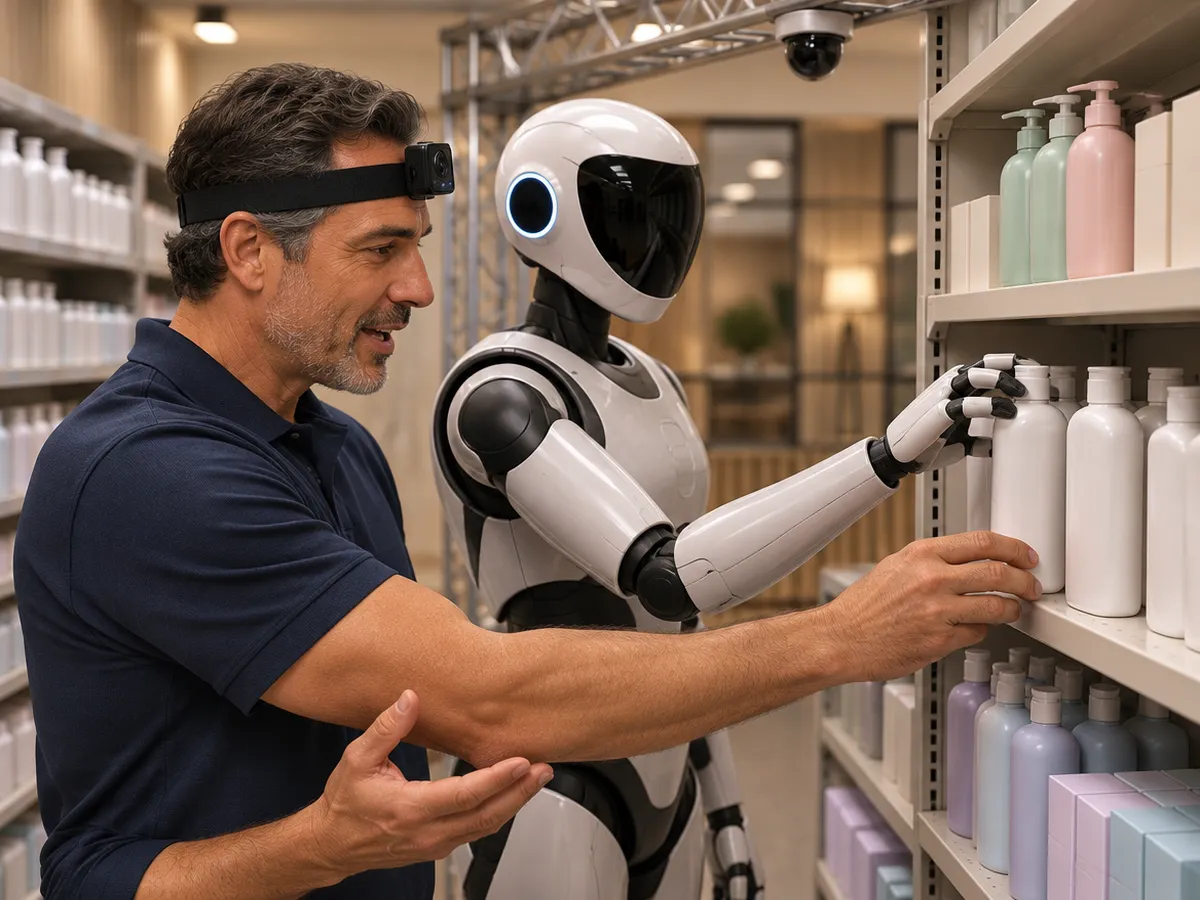
Associates come to a Metari replica of your store, backroom or DC bay for scheduled sessions. They do the task the way they do it on a good day, then correct the humanoid when it gets it wrong. Those corrections are some of the most valuable data a lab can get.
Each attempt is scored against the acceptance criteria you wrote, across the same set of variations. Interventions are logged, and every result links back to the recorded episode.
| Task | Vendor A | Vendor B | Vendor C | Decision |
|---|---|---|---|---|
| Restock and face a shelf40 variations · store floor | 34 / 40 | 22 / 40 | 29 / 40 | Store validation |
| Case from pallet to backstock30 variations · backroom | 27 / 30 | 25 / 30 | 18 / 30 | Store validation |
| Stage a pickup order24 variations · pickup | 13 / 24 | 16 / 24 | 11 / 24 | More training |
| Case pick to conveyor36 variations · DC | 33 / 36 | 20 / 36 | 31 / 36 | DC validation |
Illustrative example. Not a measured result. Each row would also link to episodes, failure reviews and intervention logs.
Once a task passes, it can be dispatched to an approved humanoid in a selected store, route or DC. Each attempt writes a structured log back to the same record your teams already use: what it detected, what it retrieved, what it decided and the evidence it created.
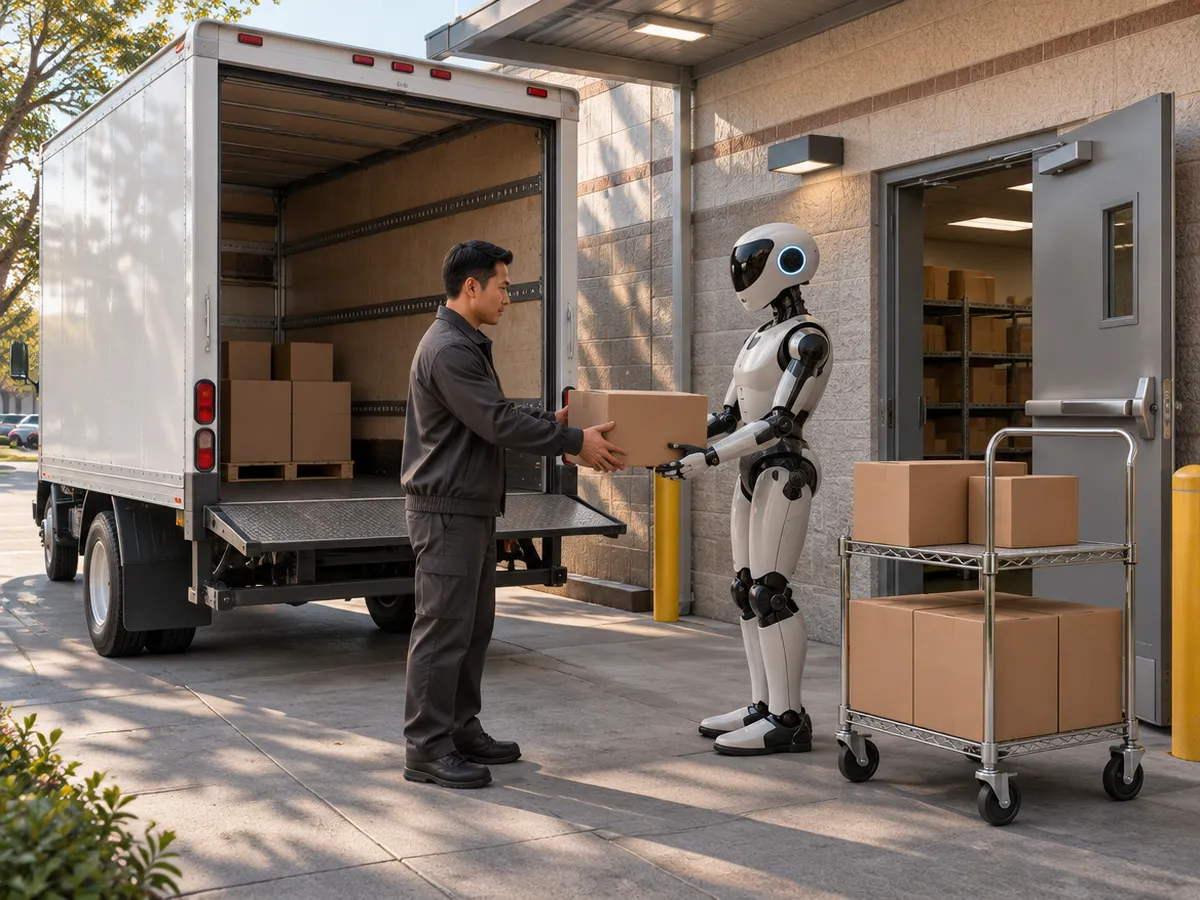 Back door · morning
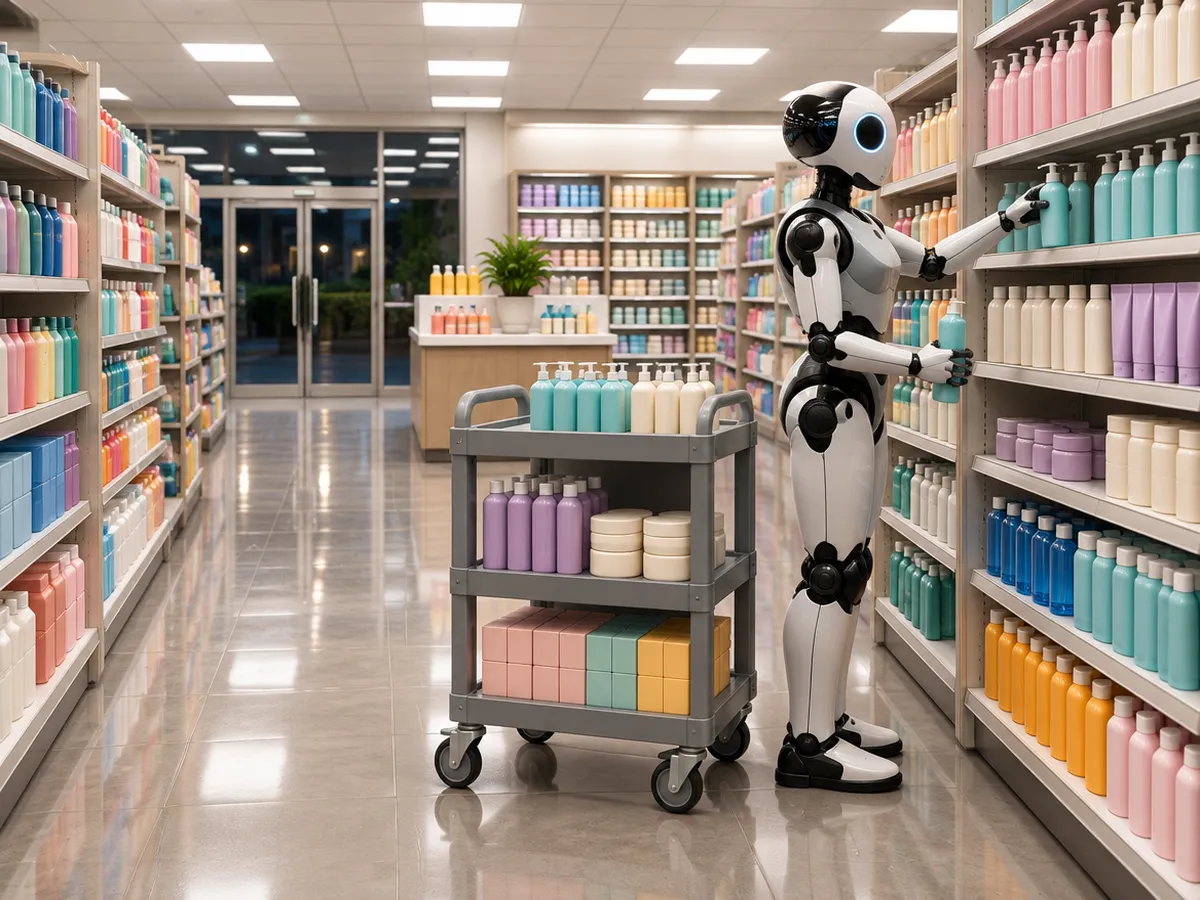 Aisle · after close
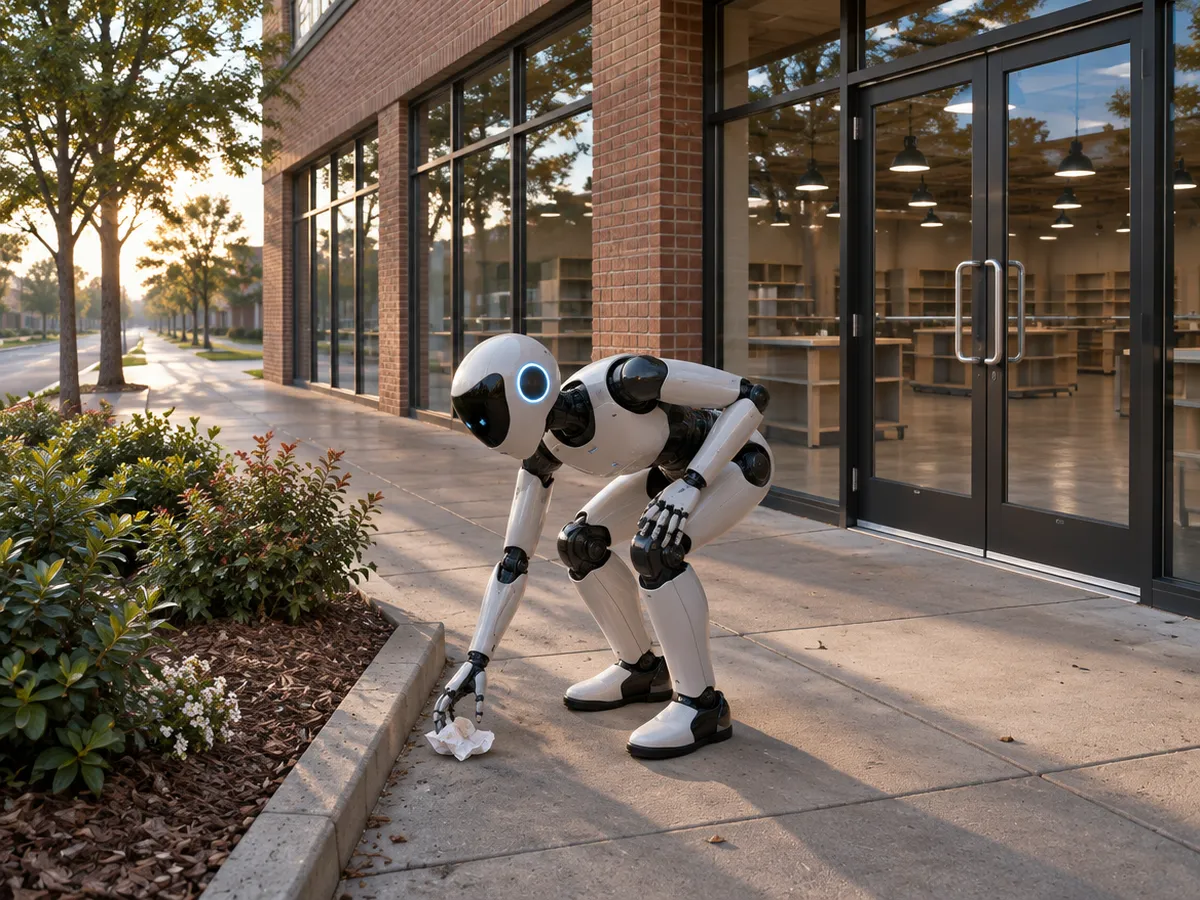 Entrance · before open
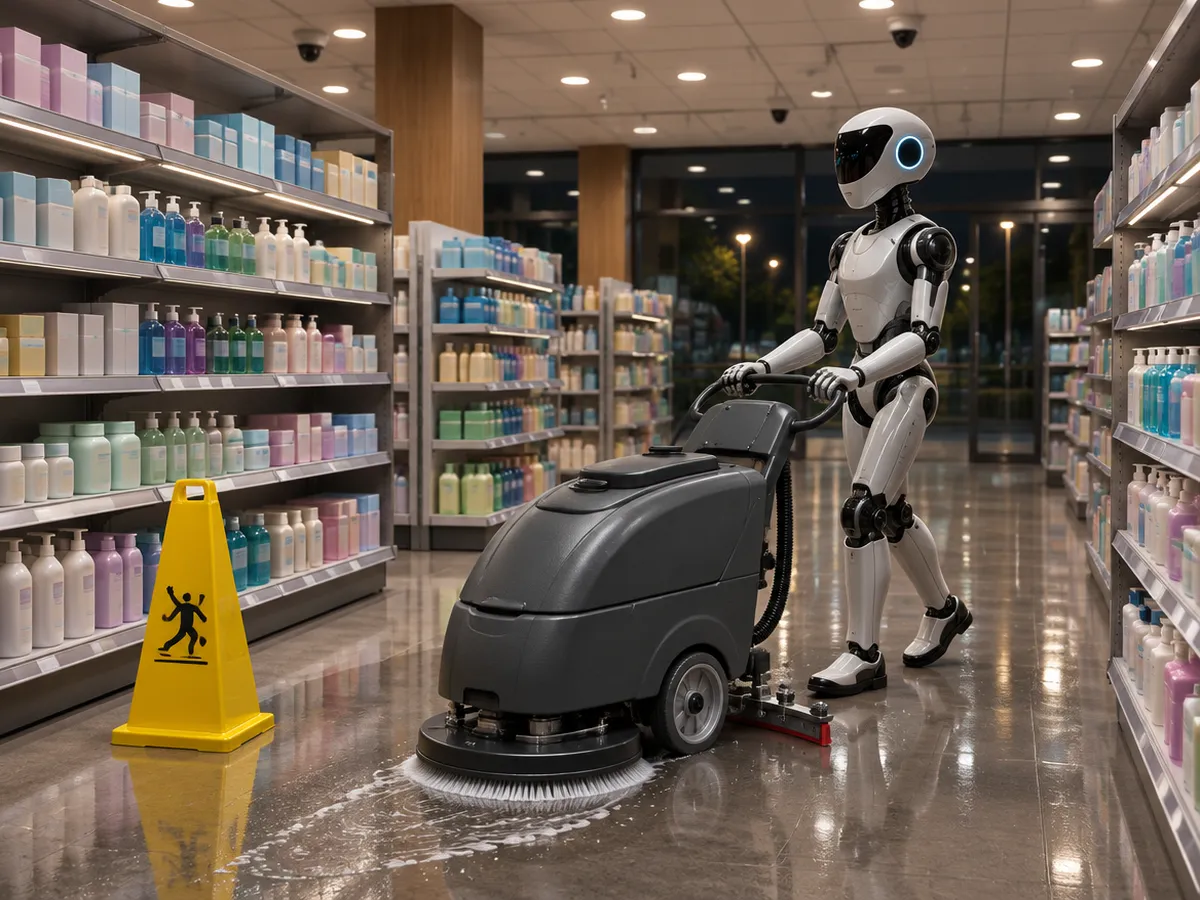 Main aisle · night
Illustrative concept. Task IDs, times and logs are examples. Field work happens only under a separate agreement and with people supervising.
See the owner, the next step and the proof it was done.
Review exceptions and send support where it is needed.
Spot repeat issues and which tasks are ready to scale.
Decide where humanoid hours pay back, task by task.
| Evidence | What it changes | How it is measured |
|---|---|---|
| Verified task closure | Shelves restocked and aisles cleared without a second check | Restock time · rework |
| Humanoid hours on repeat tasks | Associates spend more of the shift with customers | Paid hours · overtime |
| Shared task history | Repeat issues found across stores, not store by store | Repeat issues by district |
| Corrections fed back | Each round of training starts from what failed in the field | Interventions per task |
Labor savings depend on actual reductions in paid hours or overtime and must be validated task by task.
Each phase is scoped and agreed before it starts. Nothing moves into a store, route or DC until it has passed in the replica.
Rank store, backroom, delivery and DC tasks by labor hours and automation fit. No changes in your stores.
Associates demonstrate the top tasks, and humanoid vendors run them in Metari’s environments.
Passing tasks move into a small number of stores, routes or a DC, with people supervising and data returning.
Expand task by task and region by region. Each new site feeds the next round of training and validation.
Tell us the tasks that cost you the most labor. We can start with a non-binding letter of interest that names those tasks and the evidence you would want to see, with no cost and no exclusivity.
Expert demonstrations, corrections and evaluation on the retail tasks buyers are asking about, delivered as episodes on one clock with an outcome label per attempt.
The operating layer for orders, environment setup, capture plans and evidence review. Example records are simulated.
Task domains, scorecards and deliverables are being designed with partners.
Planned, not operating. No Metari environment is operating yet.
Store, route and DC work happens only under a separate agreement with each retailer.
These are program requirements, not audited controls already in operation.
Metari does not build robots and does not train a lab’s models. No retailer program, contract or endorsement is implied by this page. Pharmacy and clinical work are out of scope.
Metari is a member of NVIDIA Inception. Membership is not an endorsement or investment.
Tell us the work, the environment and what a humanoid would have to prove. We reply to retailers, distributors and humanoid labs.