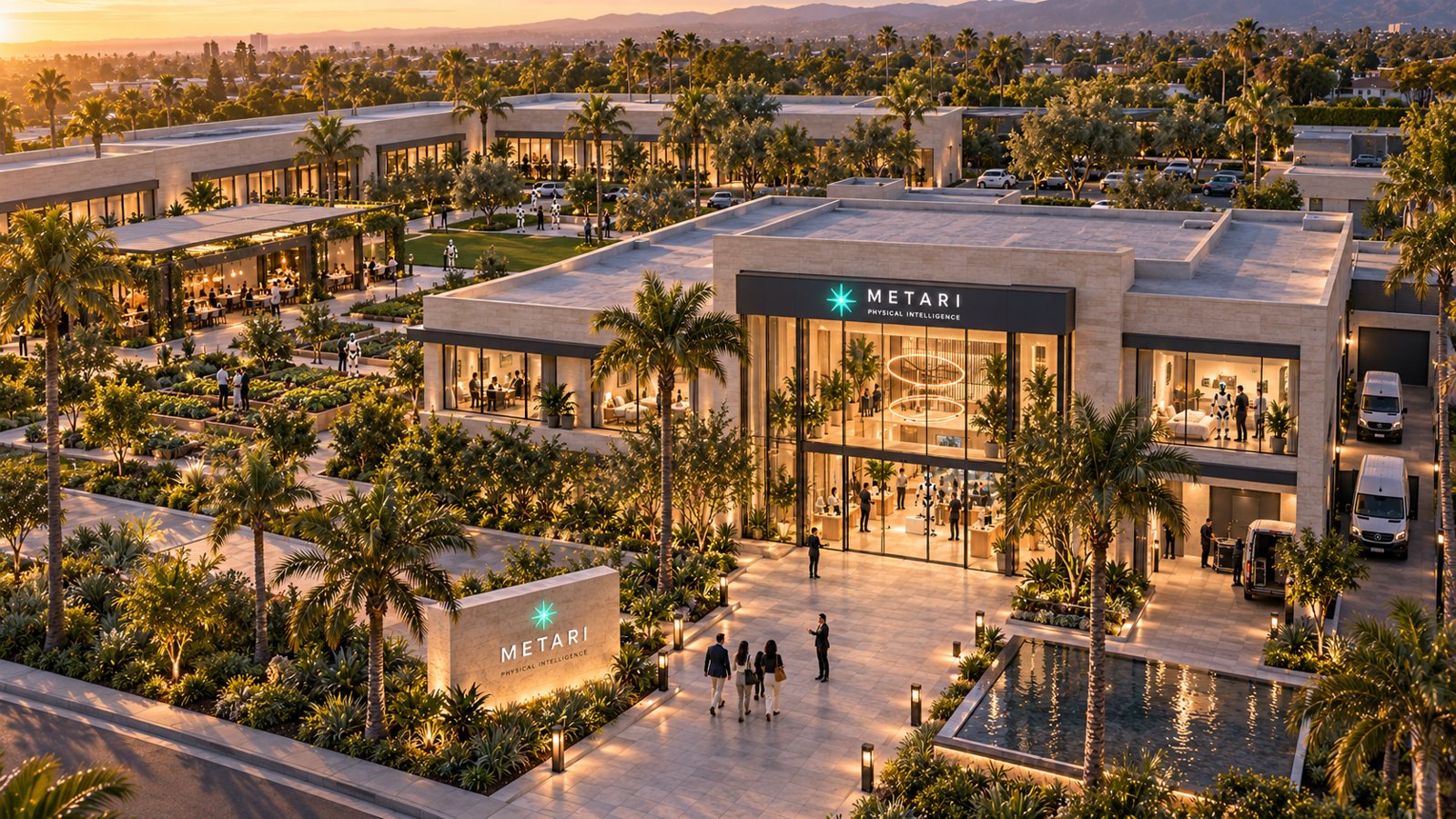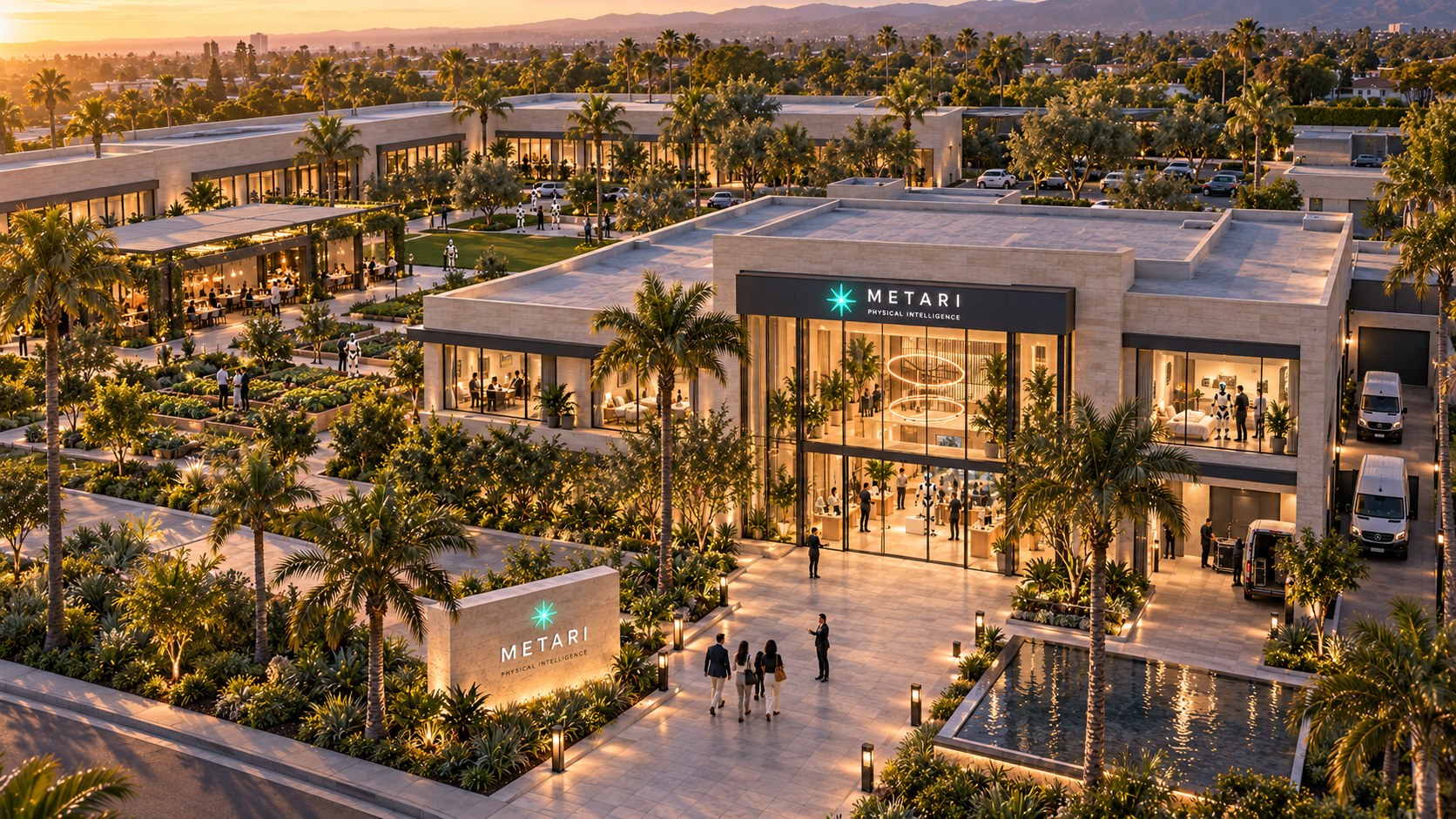
Concept rendering of the Metari physical intelligence campus at dusk
Physical Intelligence Infrastructure

An API to the physical world.

Robots cannot learn work they have never seen. Metari builds and operates the environments where that work happens, then holds them still so progress can be measured. Collect, train, deploy.

Discuss a project
Expert demonstrations.  Structured data.  Real-world evaluation.
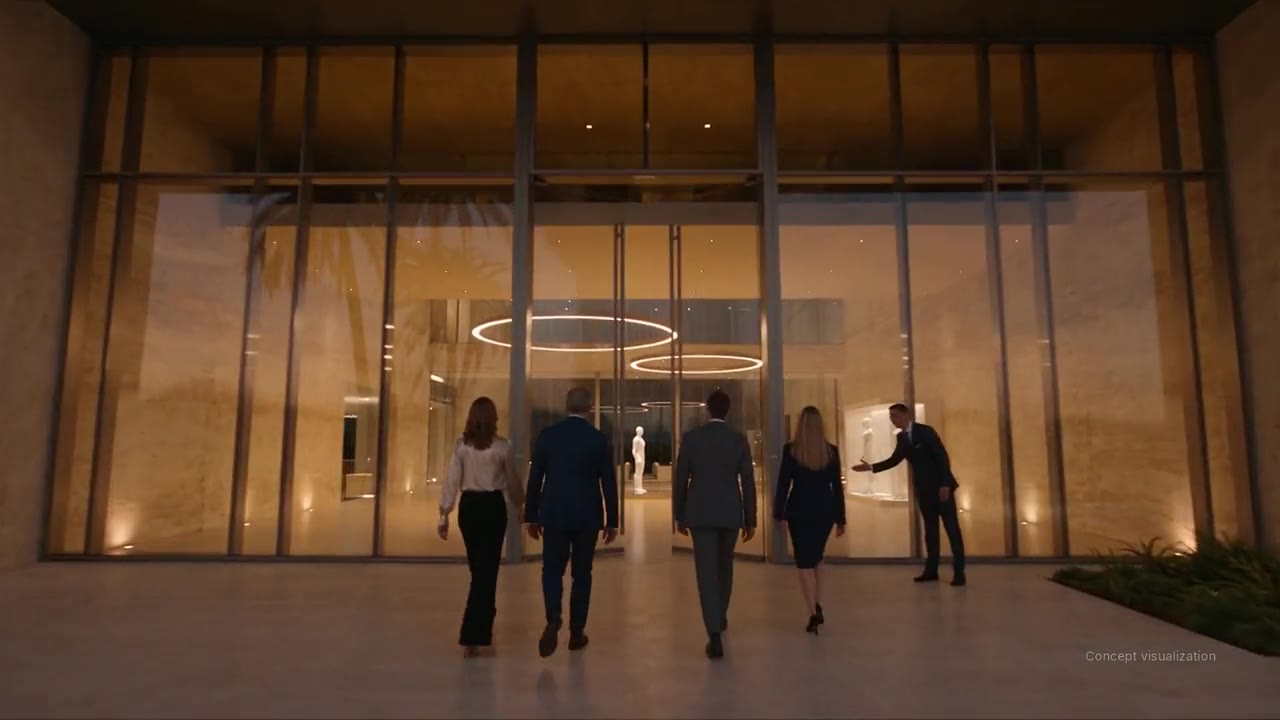
Concept visualization

See the full Metari vision.

A short film illustrating the concept end to end: the campus, expert data capture, evaluation, experience, and the path to deployment at scale.

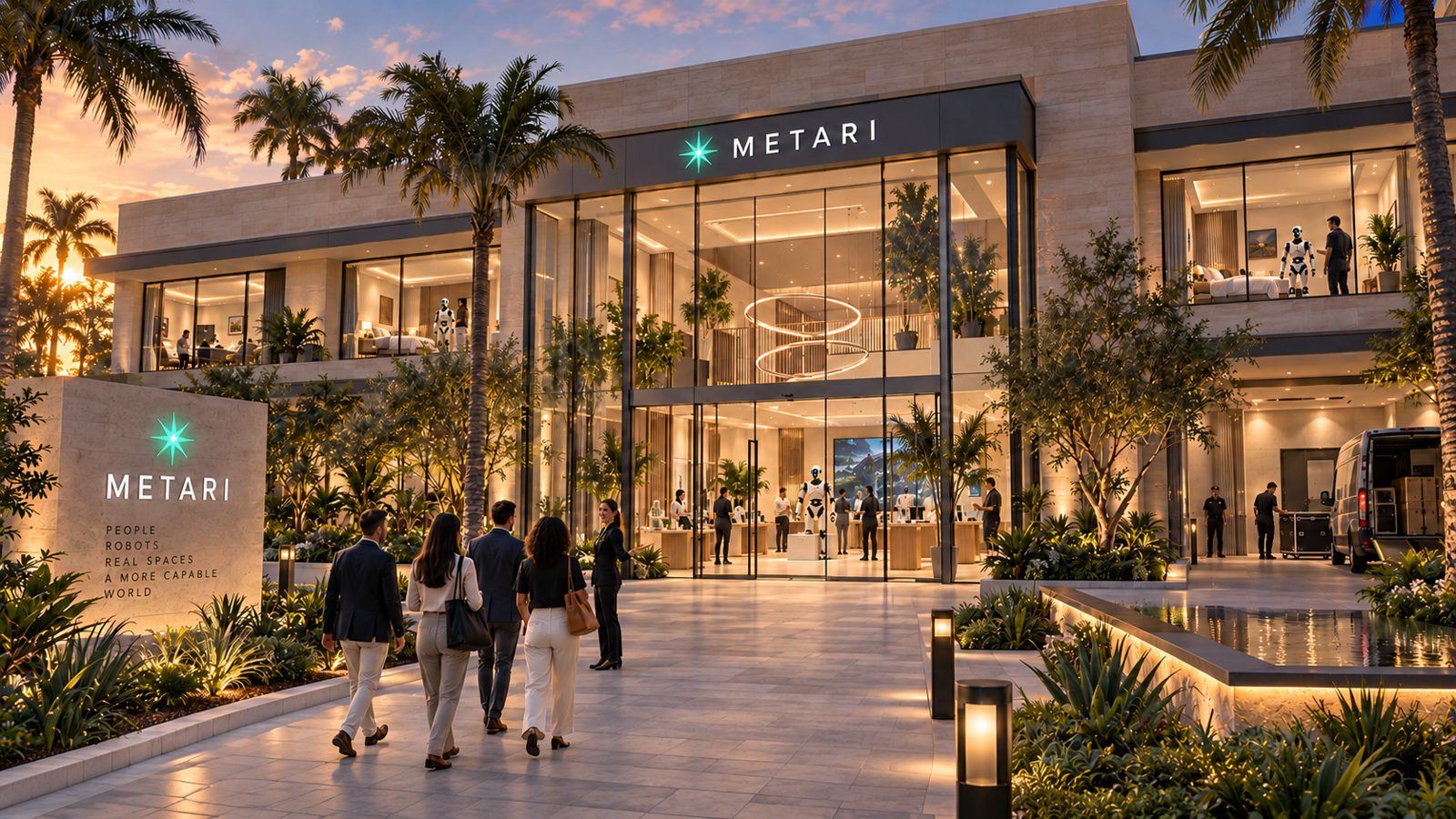
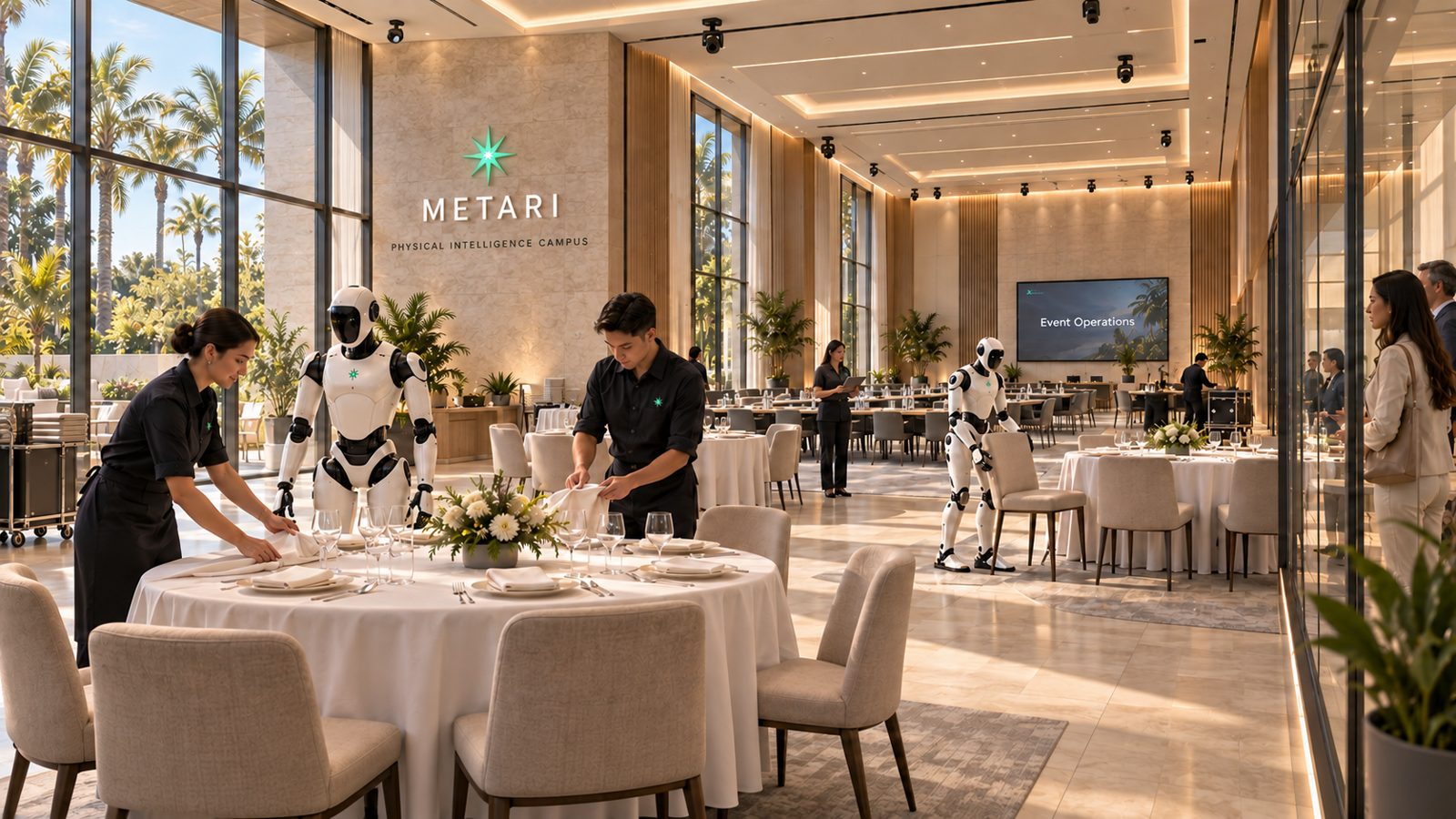
Concept rendering of guests arriving at a Metari campus
Watch the vision film · 2:02
How it works

From human expertise to real-world readiness.

01 / Capture

Capture expertise

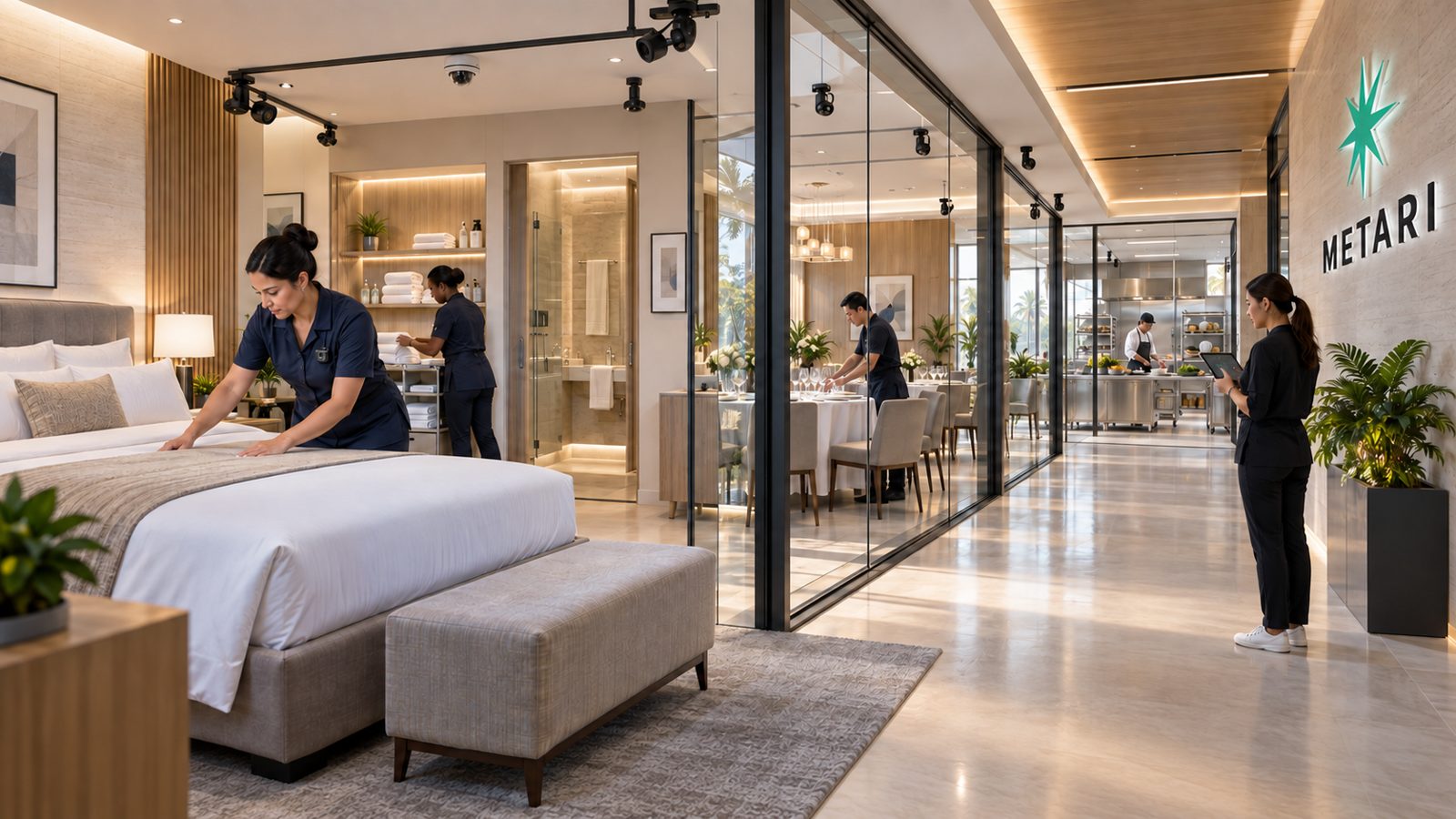
Experienced professionals do the real job at working speed, in rooms built for capture. Worn rigs and fixed ceiling, wall and working-height cameras record it on one clock, while the operator explains the decision behind each move and the standard it has to meet.

02 / Evaluate

Evaluate capability

Run the policy on the same task, in the same room, against the same acceptance criteria as the human demonstration. Nothing between the two runs has moved, so a change in the score is a change in the model and not a change in the building.

03 / Deploy

Support deployment

The building that produced the data becomes the floor where operators watch the work before they buy, then one of the first properties the robot actually works in, with the team that trained it already on site.

The shift

From reactive capture to proactive capture.

Every wearable programme running inside occupied buildings is reactive: it records whatever happened to occur that day. Occupancy sets the ceiling, guests are present, and a good day yields one or two usable room turns.

A dedicated environment inverts that. The partner names the scenario and we produce it, on schedule, to volume. No guests, reset and re-run on a shift pattern, against a task list the partner writes. Clutter, lighting, linen, spills and operator are changed deliberately between runs. Spills, breakages and maintenance faults can be staged on purpose, which is the long tail a live-building programme will almost never catch on camera.

Campus

A place to see, capture, and evaluate physical work.

Our campus concept brings public demonstrations, controlled task environments, and technical teams together in one setting.

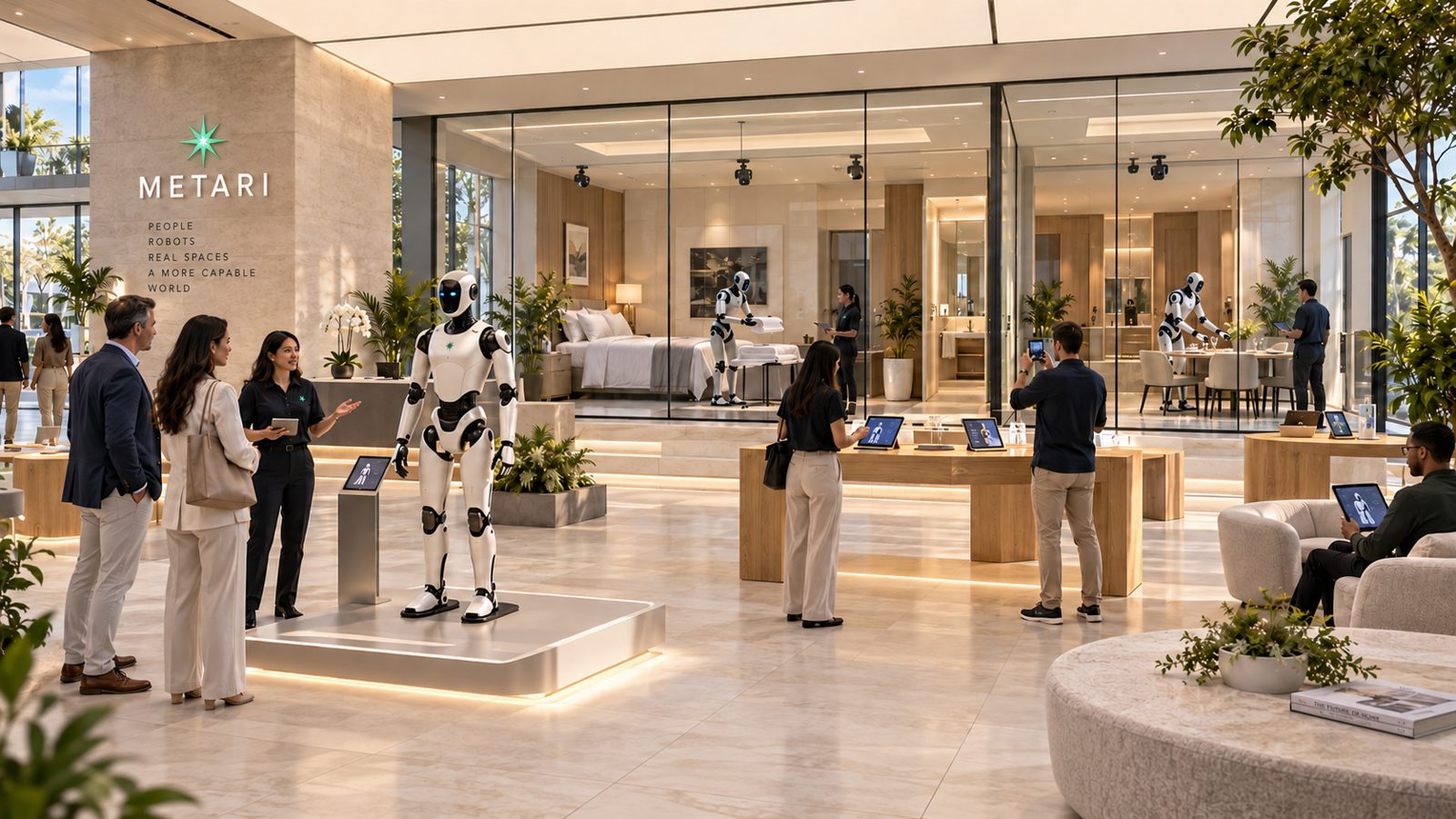
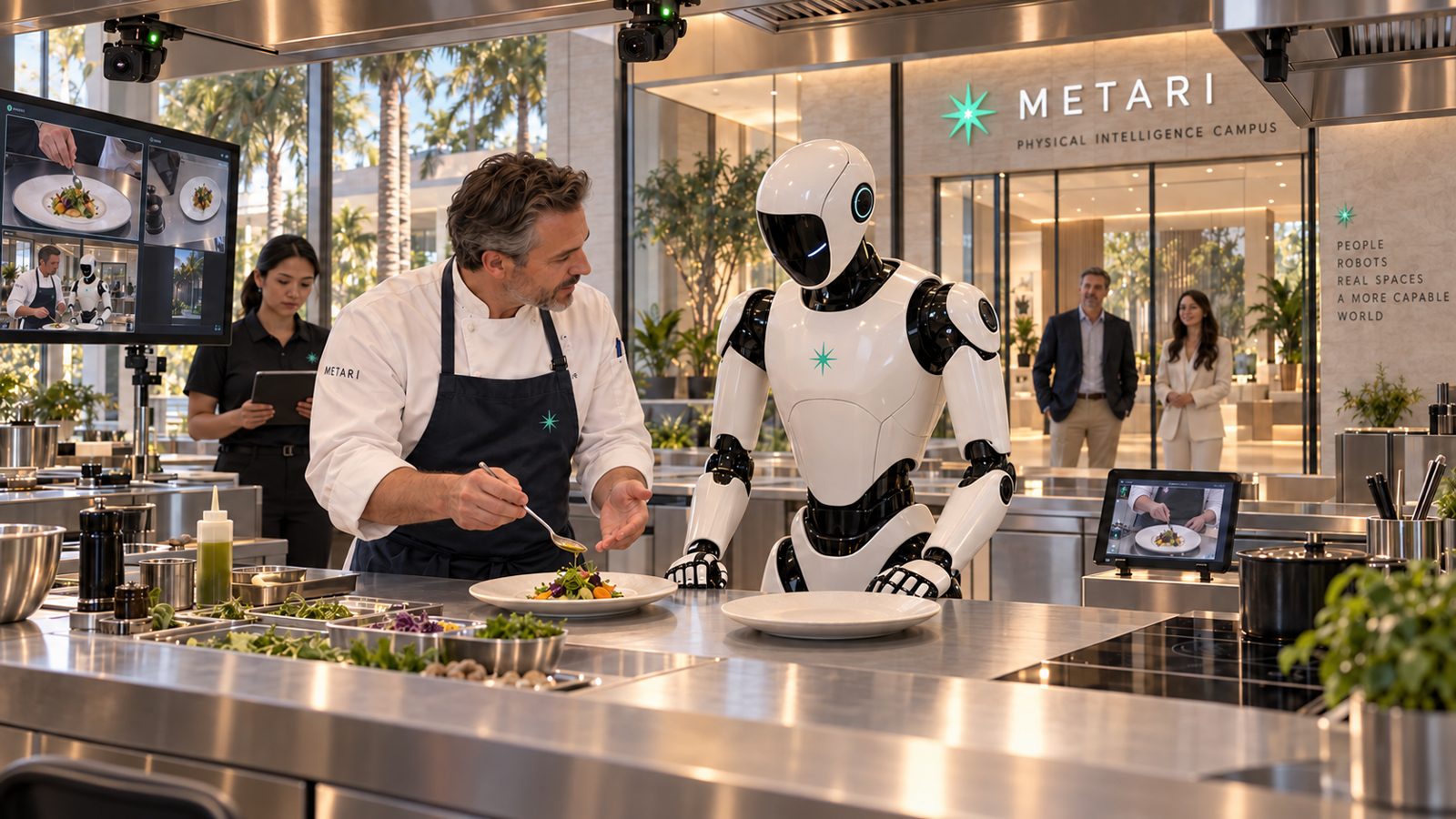
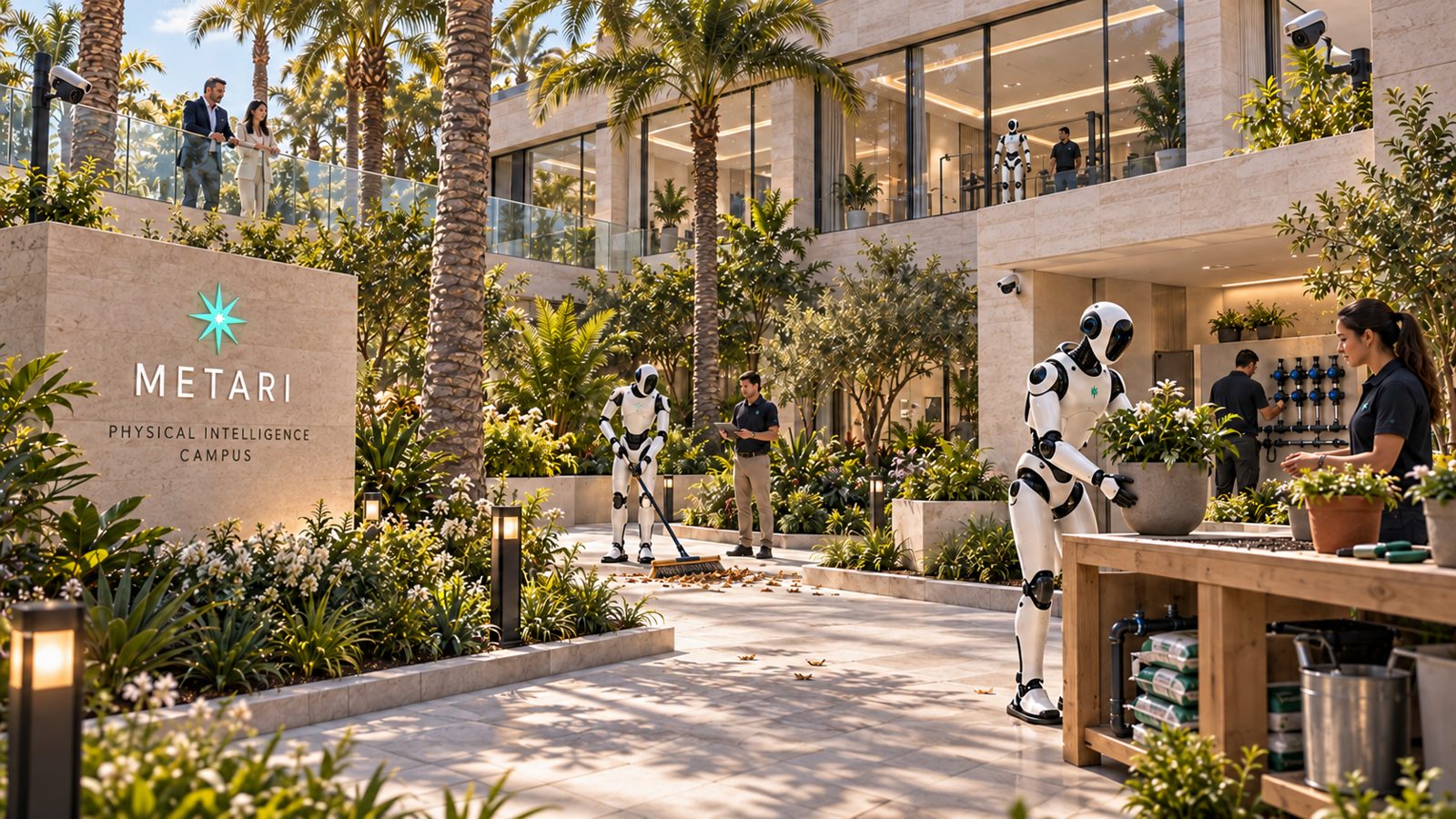
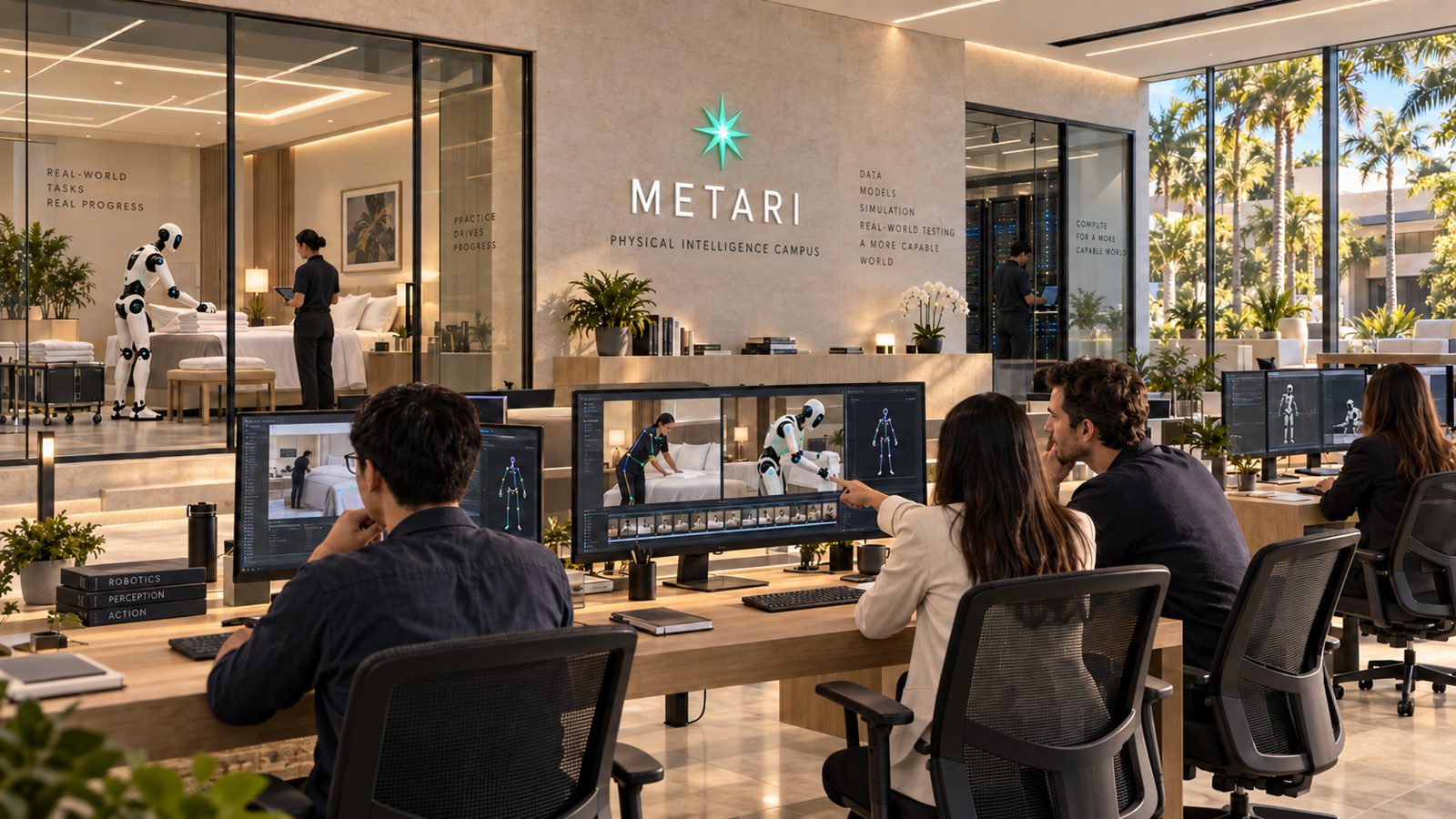
Concept rendering of the public showroom with a humanoid on display and training visible through glass Concept rendering of a chef demonstrating a plating technique beside a humanoid Concept rendering of humanoids working in the campus gardens and grounds Concept rendering of the data and evaluation lab with motion-capture review on screens Concept visualization

Experience

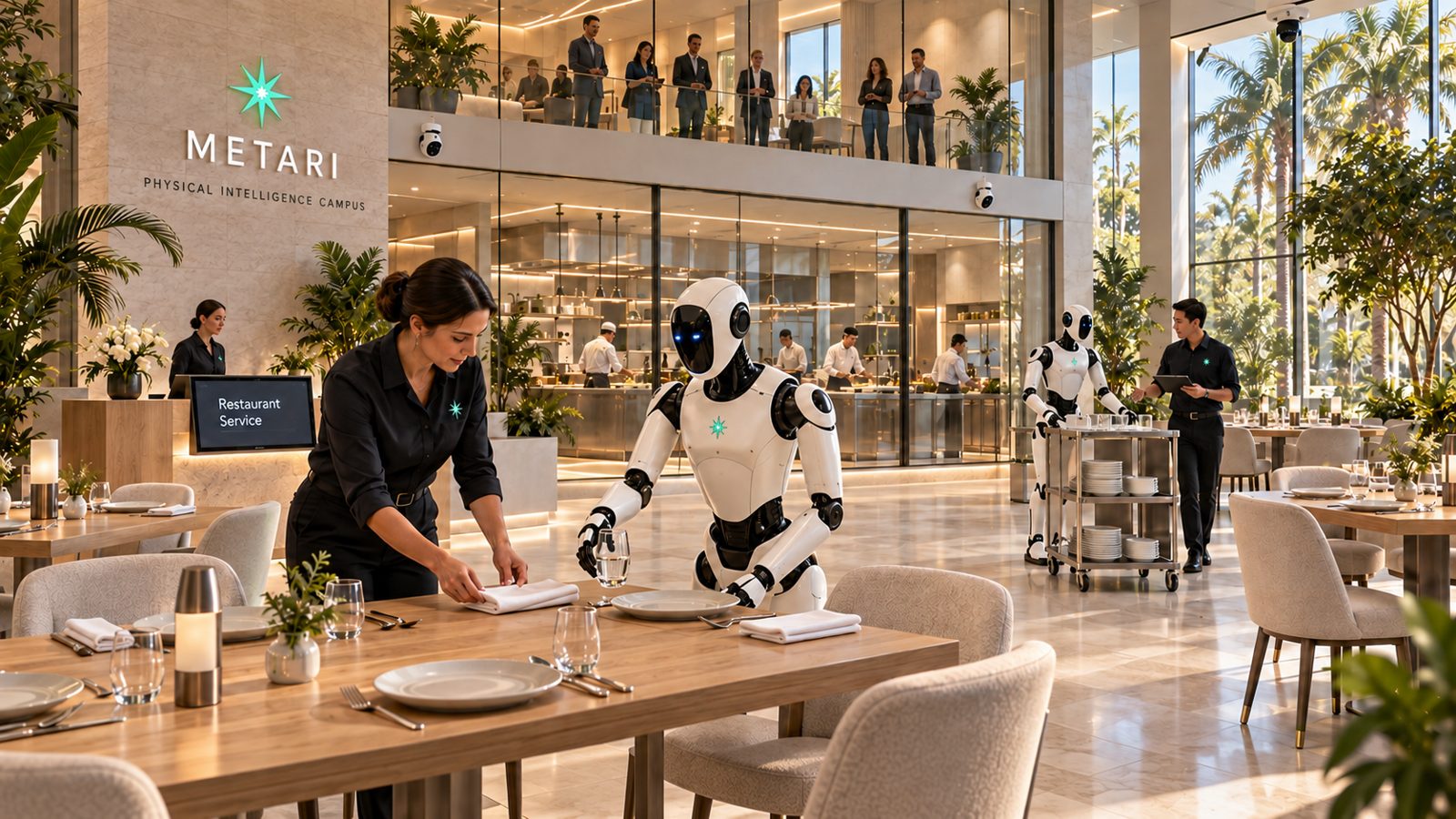
Explore humanoids in an elegant public gallery, with supervised training activity visible through glass.

Concept

Explore the campus concept.

Click through the environments. Every image is a concept visualization.

The vision

Metari’s vision is to build the infrastructure that helps physical AI move from development into everyday operations.

Its campuses would combine expert data collection, structured evaluation, and elevated experiences where enterprise buyers and the community can explore humanoid capabilities through guided demonstrations and supervised participation. Planned initial revenue would come from training data and evaluation services, with deployment support and ongoing service expanding over time.

The network could grow through leased spaces, converted properties, and property investment partners, while Metari develops the software, operating processes, and customer relationships connecting each location. The long-term advantage would come from accumulated expertise, useful data, repeatable evaluations, and deployment feedback.

A description of Metari’s concept and direction, not of existing operations.

Beyond a showroom

Not just an experience. The foundation layer for deployment.

The campus is where operators and the public can see humanoids work in real settings, and where robots are prepared, evaluated, and readied for the world. Experience builds belief; belief drives adoption.

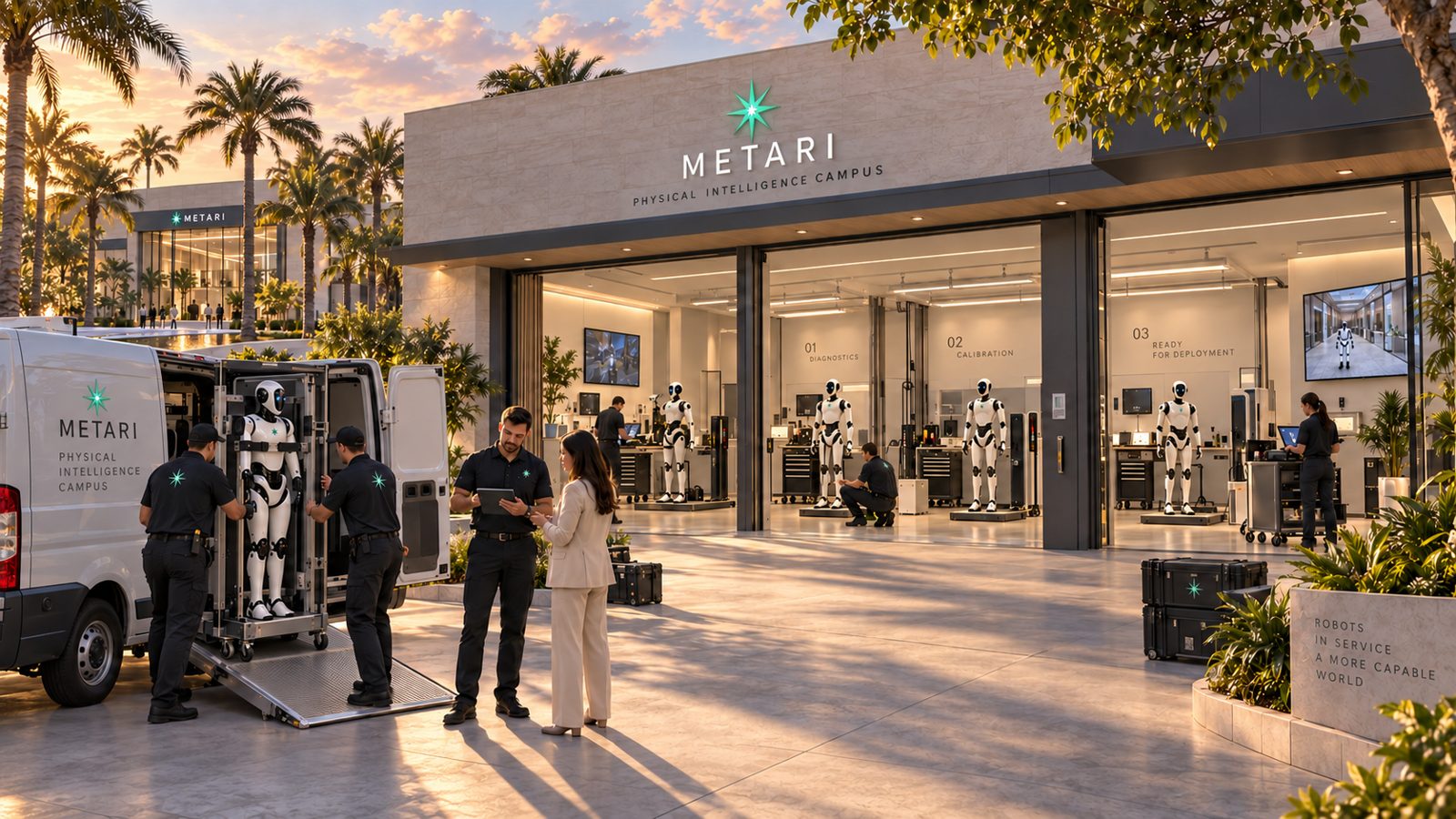
Concept rendering of deployment and readiness baysConcept visualization
  • Build relationshipsA place for operators, partners, and physical-AI teams to meet and plan real work.
  • Showcase the productSee it, touch it, believe it. Commercial and consumer visitors experience humanoids in real environments.
  • Demonstrate and captureExperts perform, robots learn, and every run becomes structured data.
  • Prepare and deployDiagnostics, calibration, and readiness: the on-ramp to deployment at scale.
The data

Capture the judgment behind the movement.

A recording shows what happened. Expert context helps explain why it happened, whether it met the standard, and how to recover when it did not.

Concept rendering of a housekeeping demonstration in an instrumented room Illustrative example
TaskGuest-room bed setup
Expert observationA housekeeper smooths and tucks the sheet.
Quality-review noteConsistent tension across the surface; corners formed.
Review statusRecorded

An illustrative interface. Not live sensor data.

Evaluation

Can it do the task when the room changes?

A successful demonstration is a starting point. Evaluation asks what happens with a different layout, unfamiliar objects, or a need for human help.

Illustrative evaluation · task: place folded towels on a shelf

Demonstration environment
Concept rendering of the original demonstration environment

An expert demonstrates the task in a known layout, establishing the standard for a correct result.

Changed environment
Concept rendering of a changed environment for evaluation

The shelf position and arrangement change, and the objects are presented differently.

Evaluator’s observations
  • Was the task completed?End state checked against the defined result.
  • Was the placement correct?Position and orientation reviewed by an expert.
  • Was human assistance needed?Any intervention is recorded for the next cycle.
Why Metari

Built around the expertise behind the work.

Expert access

People who know the work

Relationships with experienced operators and professionals who know how tasks should be performed.

Varied environments

Rooms that change

Configurable spaces that introduce new layouts, objects, conditions, and exceptions.

Consistent standards

Comparable observations

Task definitions and evaluation methods that make observations comparable across runs.

Operational feedback

Learning from pilots

Lessons from pilots that guide what to demonstrate, test, and improve next.

TASK BRIEF HOURS + JUDGMENT SCORECARD WHAT BROKE Same room. Same rig. EVERY PASS 01 · WITH PARTNER Define the task 02 · METARI Capture expertise 03 · METARI Evaluate performance 04 · METARI Learn from deployment METARI OPERATES SET WITH PARTNER

Collection that stops at delivery is a one-off purchase. The same rooms, held still and run as an evaluation environment, are what turn a data sale into a standing programme. Every pass returns a targeted brief, not more of the same.

Our intended advantage is the combination: expert relationships, useful data collected with appropriate rights, repeatable evaluations, and experience that improves the next engagement.

Business model

Revenue that starts today, and compounds.

The near-term business is expert data and model training. The campus network and deployment layer scale on top of it.

Today

Data collection & training

Expert demonstration data and model training, sold to robotics and physical-AI teams. The revenue that exists now.

Next

Evaluation & benchmarking

Recurring evaluation of humanoids against real-world task standards as their models iterate.

As the network grows

Deployment & operations

Readiness, deployment support, and the campus and real-estate layer that follows adoption.

How it scales

A capital-efficient path to a national network.

Hospitality gives us ready-made environments. The concept is to grow the campus network through real estate, not build every site from scratch.

Partner

Lease hotel blocks

Work with operators to instrument and run blocks or floors of existing hotels as live capture and demonstration space.

Convert

Acquire & convert

Buy existing hotels and convert them into Physical Intelligence Campuses: experience, capture, and deployment under one roof.

Capital

REIT & fund partners

Partner with REITs and funds that own the land and buildings while Metari operates and converts them, and acquire select properties directly.

Supply

Rooms, not construction

The properties within reach hold room inventory in the thousands, across multiple markets and property classes. Capacity is added by taking floors out of inventory and instrumenting them, not by constructing buildings. The camera rig and its calibration are the expensive part, and they never move.

Each property becomes a compounding asset: an experience destination, a data-generation engine, and a deployment hub. A concept for how the network could scale, not a description of existing operations.

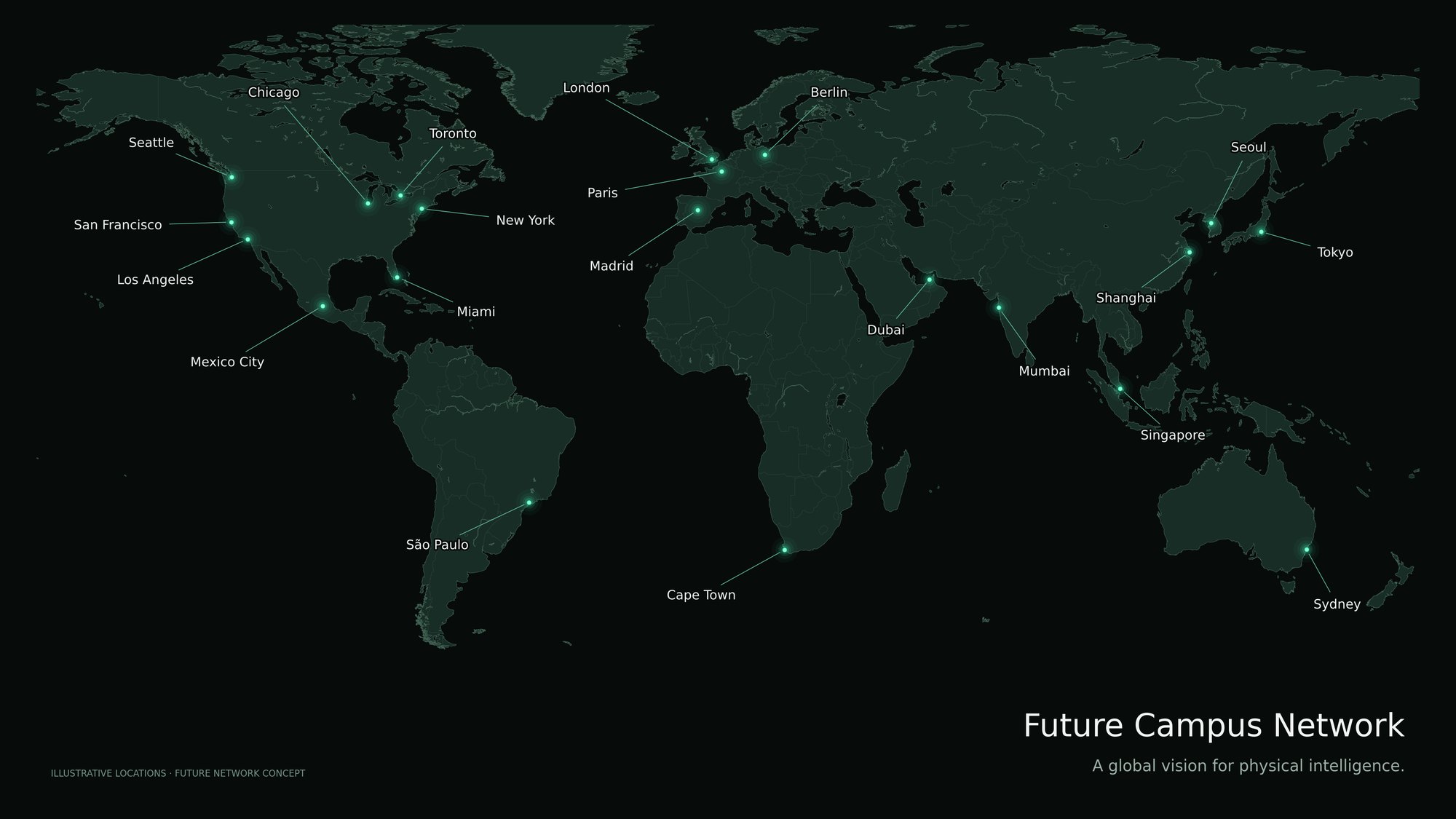
Illustrative map of a future Metari campus network
Concept visualization

The campus concept in motion.

A closer look at how experts, instrumented environments, and evaluation could come together on a single campus.

Concept rendering of the Metari campus exterior
Watch the campus film · 1:12
Engagement

Start with a specific task.

Humanoid & physical-AI teams

Data & evaluation

Discuss expert demonstrations, task variation, dataset requirements, and evaluation design.

Discuss a data or evaluation project
Hospitality operators

Operating partnership

Explore how your operating expertise and environments could contribute to future data collection and supervised pilots.

Explore an operating partnership
Investors & strategic partners

The infrastructure model

Learn about the campus concept and the infrastructure model behind it.

Connect with the founder
Founder

Built from experience running the work.

Helping humanoids learn how real work should be performed and evaluated, from someone who has spent a career defining and running it.

Steven Ortmann brings more than 20 years of hospitality operating experience, including leading teams, defining operating procedures, and managing service quality. Metari applies that perspective to a new challenge: helping humanoids learn how real work should be performed and evaluated.

Steven OrtmannFounder, Metari
Start a conversation

What should a humanoid learn next?

Tell us about the task, environment, or partnership you have in mind.