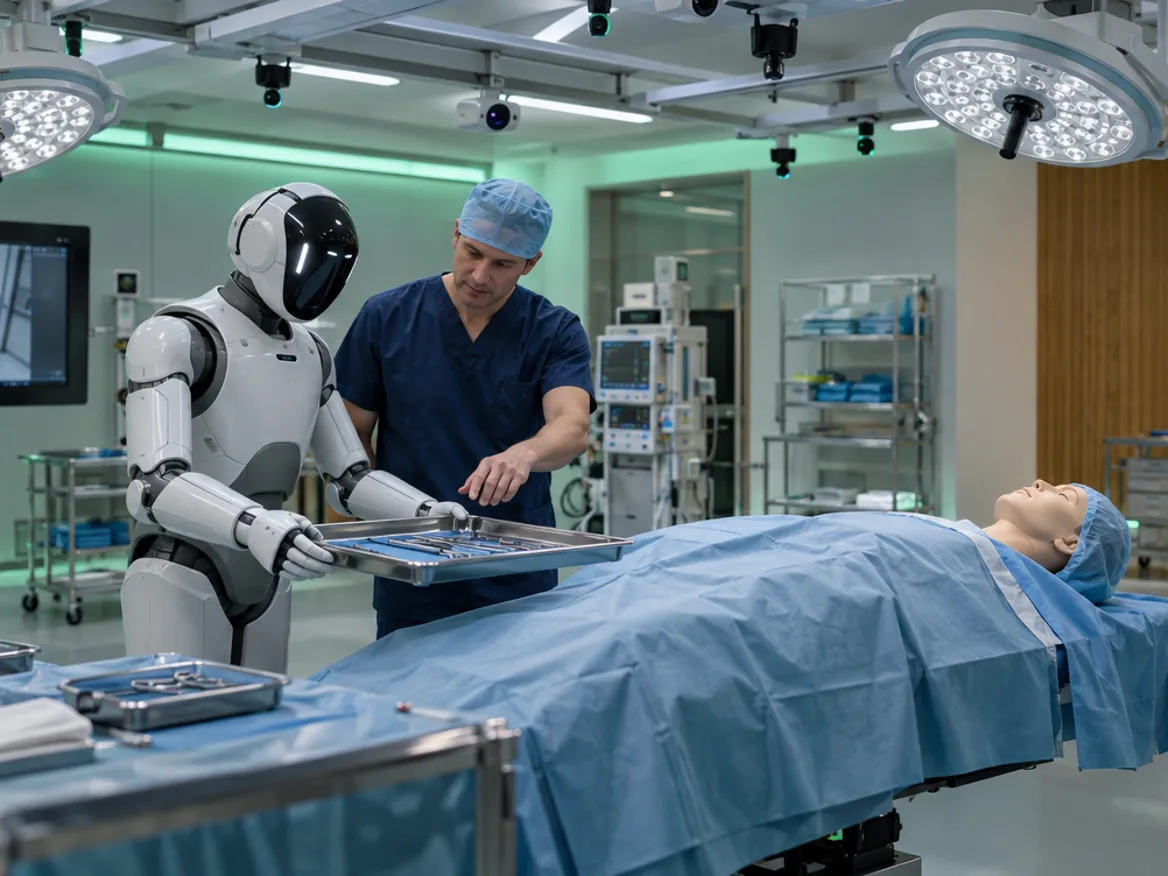
Room 01
Mock operating room
Room setup, turnover, instrument tray handling and supply staging around a draped mannequin.
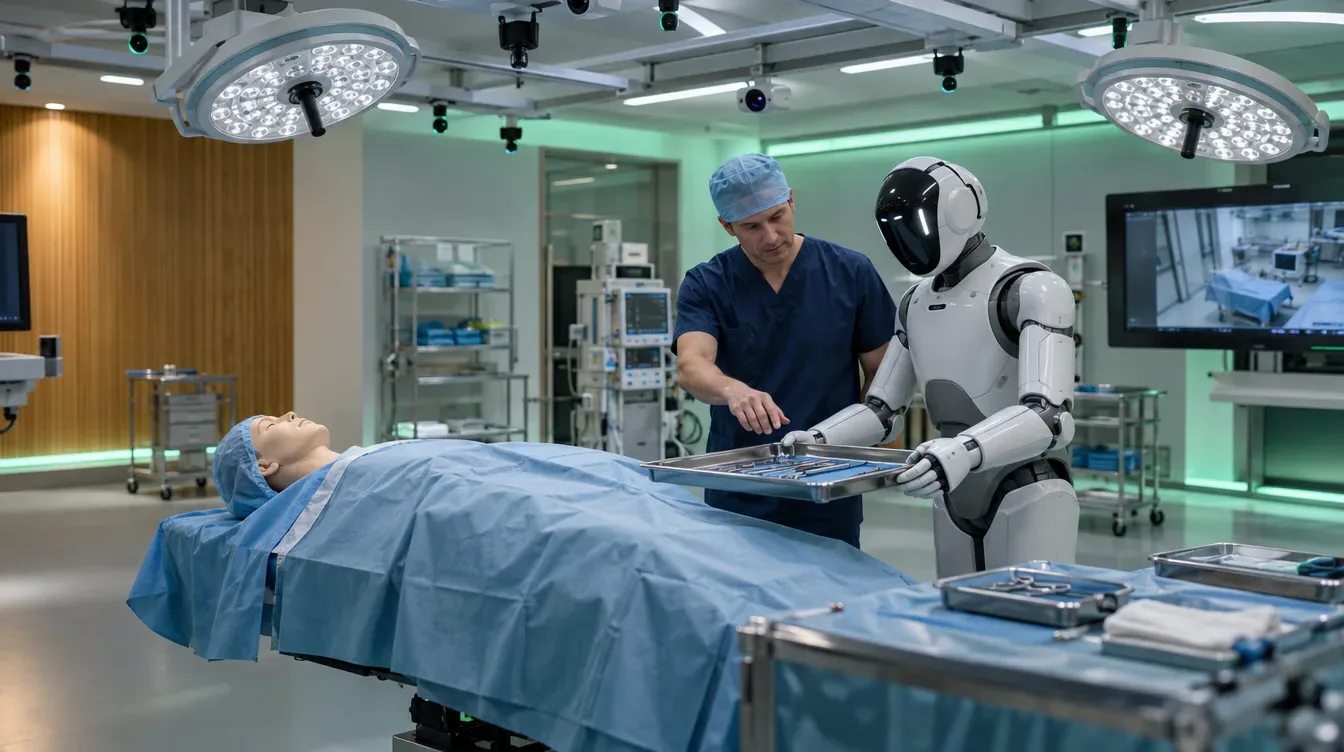
Hospitals are among the hardest places for a robot to work, and the hardest places to collect training data. Metari Health builds mock clinical rooms, staffs them with credentialed clinicians and instruments them for capture and evaluation. Real procedures, real standards, no patients.
Task order → mock clinical room → clinician + humanoid → structured data → clinician-scored evaluation → repeat
Clinical work runs on precise sequences, sterile boundaries and rules that cannot be broken. Physical AI teams cannot simply film it inside a working hospital. Metari Health gives them a place where the work can be performed correctly, repeated and measured.
Privacy, infection control and liability keep cameras and robots out of real clinical spaces.
A tray assembled in the wrong order or a broken sterile field is a failure, even if it looks fine to a non-expert.
Hospitals want help with logistics, turnover and supply work. Robots need proof they can do it safely first.
Each environment is configured around the tasks a buyer specifies, then held steady so progress can be compared run to run. Training mannequins and trained staff only.
Room setup, turnover, instrument tray handling and supply staging around a draped mannequin.
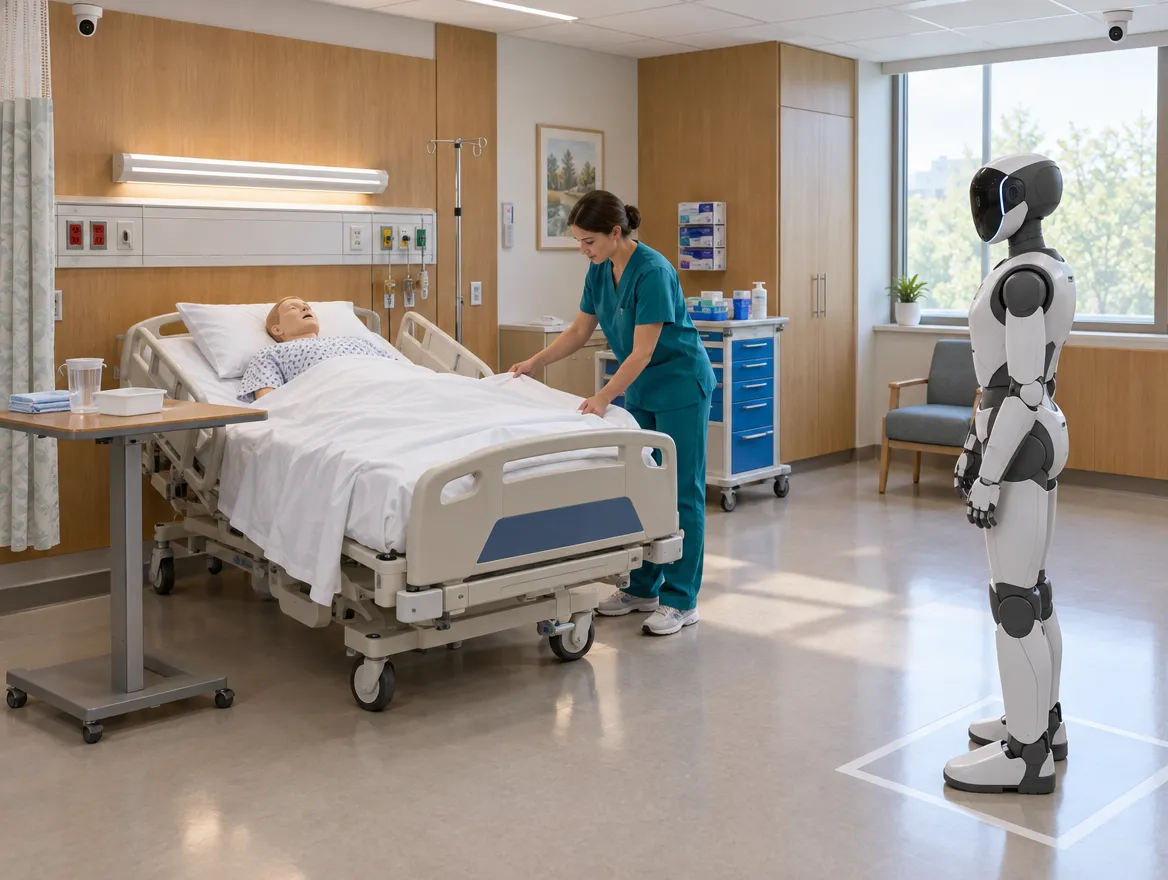
Bed making, linen change, restocking and room reset, demonstrated by nurse educators.
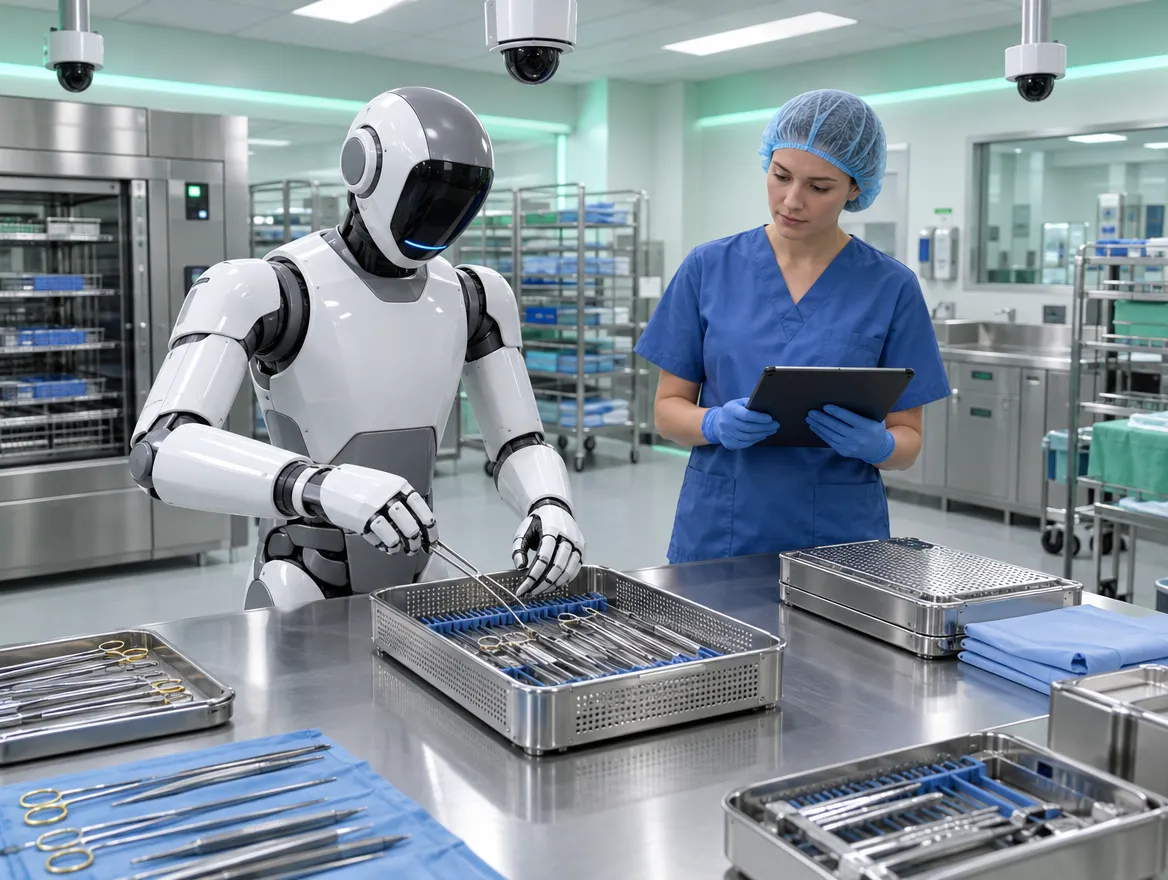
Instrument sorting, tray assembly against a count sheet and case-cart preparation.
Concept images. No Metari clinical environment is operating yet. No patients, no clinical care, no medical claims.
Room layouts, clinical standards, clinician lessons and guardrails, connected. When a humanoid works, the brain traces what happened and why.
Simulated scenes and scripted system events in mock rooms. Not patient care.
Metari Health runs on the Metari Command Center. A team sends a task order; we configure the room, staff it with the right clinicians, capture every attempt and return evidence scored against clinical standards.
Tasks, variations, volume and acceptance criteria.
Layout, equipment and mannequins set to spec.
Credentialed staff demonstrate, correct and supervise.
Multi-view video, sensors and task events, synced.
Experts label steps, errors and safety events.
Structured episodes plus an evaluation report.
Clinical leaders define what success means before collection starts. Every attempt is scored the same way, so a team can see whether its system is actually getting better.
Illustrative evaluation categories. Final criteria are set with each buyer and clinical advisors.
Mock rooms, credentialed clinicians and clinician-scored evaluation for robotics and physical-AI teams. No patients and no protected health information.
Consented, de-identified procedure and outcomes data from academic medical centers, for diagnostics, device and AI teams. It would run only through institutional agreements, ethics review and patient consent.
Room layouts, task libraries and evaluation criteria are being designed.
We are forming an advisory group of academic surgeons and clinical researchers.
No patient data has been collected, licensed or accessed.
No Metari clinical environment is operating yet.
We are talking with robotics teams, clinicians and health systems about the first clinical programs.